Escaping a Dubai Summer, into a Mauritius Winter
At Summer Texture we make natural-fabric loungewear for Dubai heat. This one's a week away from it. What follows is the shortlist: where we went across Mauritius, west coast to north — the stops worth the drive
 The problem with leaving Dubai in summer is that everywhere within a short flight is also hot. So this year we went the other way — crossed the equator and landed into winter instead. Mauritius winter, at least, which is a mild one: dry, breezy, days around 23–25°C, evenings cool enough to want a hoody by dinner.
Direct from Dubai, six and a half hours, and we clearly weren't the only ones with the idea — the Emirates A380 was full. What we were after was simple: being outside in the day, which a Dubai summer just doesn't allow. So we moved across the island, west coast to north.
West Coast
The west coast is where the postcard sunsets happen — this is Wolmar/Flic en Flac, calm water, low light in the evenings.
Chamarel. A longer drive south into the highlands, and worth the day — cooler up there, volcanic soil, and the island's only working coffee plantation. You walk the rows and follow the whole thing, cherry to cup, ending in a tasting of coffee grown in the same ground as the vanilla and cacao. I could watch how something's grown and made all day — it's the same curiosity that got me into fabric to begin with.
Casela. The child-friendly version of a safari, and a good one. You go round the reserve by open truck — zebras, ostriches, antelopes, white rhinos, giraffes out in the open — then get out on foot to feed the giant tortoises. An easy half-day, and the part of the trip the kids remember longest.
Moka
Maison Eureka. A Creole-style mansion from the 1830s, above the Moka river. You wander through the actual rooms — old wooden furniture, black-and-white photographs on the walls, the whole house left more or less as it was — and end up having lunch on the porch, looking down over the garden. Quiet, green, and a real change of pace from the coast.


Port Louis
 Central Market. Running since 1844, in a cast-iron Victorian hall reportedly shipped over from Glasgow. The ground floor is the loud part — the wet market, mounds of chilies, cassava, spices by the sack, everyone talking over everyone. Upstairs is calmer: bolt after bolt of fabric, and stalls of local crafts you'd actually take home. Go before noon, while it's still full.
Aapravasi Ghat. Five minutes on foot from Central Market — the UNESCO-listed immigration depot where indentured labourers from India first arrived on the island from 1834. It's where a lot of the island's Indian heritage actually begins, and it gives the market's own Bhojpuri food stalls and tisane traditions their backstory.
Caudan Arts Centre. Right inside Caudan Waterfront — a modern theatre with rotating exhibitions from Mauritian and international artists. Check what's on before you go; it's the contemporary side of the island, and a good contrast to the markets and the old estates.
Pamplemousses
Sir Seewoosagur Ramgoolam Botanical Garden. Giant water lilies, avenues of spice trees, giant tortoises — and one of the oldest botanical gardens in the southern hemisphere. Go slowly; it's a place for wandering, not ticking off.
L'Aventure du Sucre. The old sugar factory next door, turned museum. I didn't expect to find it as interesting as I did — almost everything about the island traces back to sugar cane: the migration, the food, the languages, the money. You follow that whole story through the original machinery, still standing where it worked.
What Else
 A boat day. I'd take the catamaran over a speedboat — bigger, steadier if there's any swell. We sailed out to three of the northern islands and stopped to snorkel along the way, in water clear enough to watch the fish before you're even in it. A full, slow day on the water.
What Actually Earned Its Spot in the Suitcase
For all that moving around, the same two pieces kept coming out of the bag.
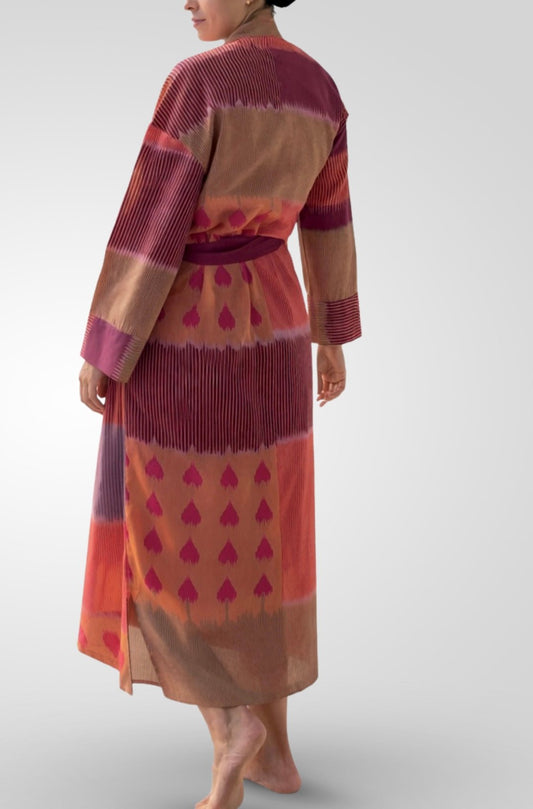
The kimono — I wore it open over a swimsuit walking back from the water, and to move around the hotel. That's a winter thing, mostly: the sea is properly cold that time of year, nothing like the bathwater Dubai gives you in July — you want a heated pool, and something to throw on the second you're out of it.
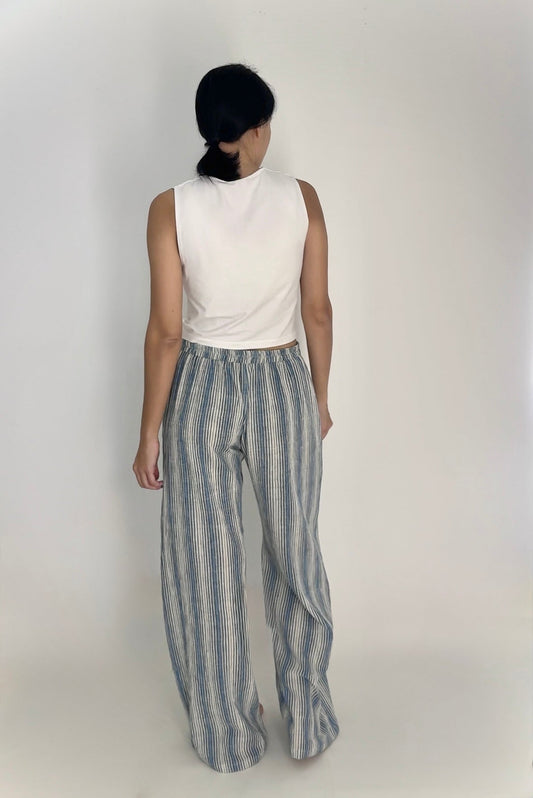
The kala cotton wide-leg trousers did the daytime. Winter or not, midday still gets hot, and I wore them on repeat — a uniform, basically — to explore. Rain-fed cotton from Kachchh, Gujarat, and it does exactly what you want in that heat: moves air, doesn't cling, no held-in warmth by mid-afternoon.


That's really why I travel the way I do — to go and see how a place came to be, how things get grown and made. Mauritius gave a lot to be curious about.